
Spinner Merge
Sunday.ggArcade
3.554.00 Reviews
- Version
- 3.8
- Installs
- 10.00M
- Age Rating
- Everyone
Screenshots




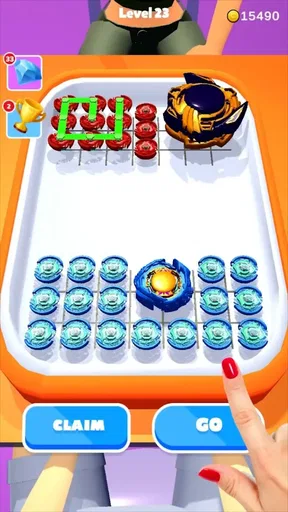



Our Review of Spinner Merge
 Analysis by Appyee
Spinner Merge is the kind of arcade game I can open for a short break and understand almost immediately. The basic appeal is built around combining spinners, improving the blades attached to them, and sending them into battles against rivals. That simple loop makes it approachable, but it also means the game depends heavily on whether you enjoy repeating quick decisions and watching small upgrades change the next encounter.
I reviewed it as a free game from Sunday.gg, and my first impression was that it aims for instant action rather than a long tutorial or a complicated story. It is suitable for Everyone, runs on Android devices using version 7.0 or later, and the current version is 3.8. That broad compatibility helps explain why it has reached more than ten million installs, although the average score of 3.5 from roughly three thousand ratings suggests that the experience will not satisfy every player equally.
How the basic battle loop feels in everyday play
The usual session starts with a practical question: should I merge now for a stronger spinner, or keep separate pieces available so I have more flexibility? That choice is the heart of the game. Combining items feels rewarding because the board becomes easier to read, but merging too quickly can leave me with fewer options when the next rival appears. I found that the best approach is not to merge automatically whenever the game allows it. I first look at what I already have, then decide whether immediate power or future flexibility matters more.
In a normal five-minute break, I would play a few rounds, make the obvious combinations, and focus on getting through the next opponent without overthinking every move. This works well when I want something light while waiting for a bus or taking a short pause between tasks. The controls and objective are easy to grasp, so I do not need the concentration required by a traditional strategy game. At the same time, the merging decision gives the action a little more involvement than a purely automatic arcade title.
The blades add another layer to the spinner itself. A stronger spinner is useful, but the way the blade-focused progression fits into the current setup matters too. I try not to treat every improvement as equally valuable. If a change helps me win the next few encounters more reliably, I prefer it over an upgrade that looks impressive but leaves the rest of my setup poorly balanced. That habit is especially useful for new players because it prevents the early game from turning into random tapping.
There is a satisfying rhythm to the battles: prepare, merge, enter the clash, observe the result, and adjust. However, the loop can also feel repetitive if I expect a wide range of missions, deep character development, or a large strategic map. This is an arcade game first. Its strength is the quick cycle, not a large narrative campaign or a detailed simulation of spinning weapons.
A useful routine for short sessions
My preferred routine is to begin by checking the available pieces rather than immediately pressing the most obvious action. I identify which combination will produce a meaningful improvement, then keep one useful option in reserve when possible. After a battle, I reassess instead of blindly repeating the same move. This takes only a few seconds, but it makes the game feel more deliberate and reduces the frustration of entering a fight with a weak or awkward arrangement.
For a younger player, the straightforward controls and Everyone rating make the game easy to approach. For an adult looking for a serious competitive challenge, expectations should be different. The appeal is closer to a casual arcade diversion than to a complex tactical battler. I would recommend it to someone who enjoys visible progression and quick confrontations, but not to a player who needs every session to introduce a new system.
Settings and practical checks before playing often
Before settling into regular play, I would check the device’s sound and notification behavior. Spinner battles are easier to enjoy when the audio fits the situation, and a short arcade session should not unexpectedly interrupt another activity. I also pay attention to whether the game feels comfortable on the phone’s screen and whether the device has enough battery for the kind of repeated sessions I want. These are simple checks, but they matter more in a game designed around frequent, brief launches.
The game is free to download, with optional in-app items priced from forty-nine cents to nearly thirty-four dollars per item. I would decide in advance whether I am treating those purchases as completely off-limits or as occasional conveniences. That boundary is useful because merge games naturally encourage the feeling that one more improvement could make the next battle easier. Playing without spending keeps the decision-making clearer, while spending may appeal to someone who wants to move through progression more quickly.
I would also avoid making a purchase during a frustrating loss. A defeat can make an upgrade feel urgent even when the better solution is simply to change the way I combine pieces. Giving myself a few normal attempts first helps separate a genuine progression problem from a temporary mistake. This is one of the most practical habits for keeping a free arcade game enjoyable rather than letting it become an impulse-buying loop.
The version number is another worthwhile check when troubleshooting. The current release is 3.8, so I would make sure the installed copy is up to date through the normal app store process before assuming that unusual behavior is part of the design. I would also remember that the minimum Android requirement is 7.0. That is friendly to older devices, although performance can still vary depending on the phone and how much else is running.
Faster patterns that save attention
The fastest way to play is not necessarily to tap as quickly as possible. I get better results by creating a repeatable scan: identify matching spinners, check whether a blade improvement is immediately useful, and then decide whether the next battle justifies a merge. Once that order becomes familiar, I spend less time hesitating. The game remains casual, but my actions become more consistent.
One pattern I like is keeping the board readable. If I combine everything the moment a merge appears, the available choices can become harder to evaluate. Leaving a useful lower-level piece visible can help me recognize the next combination instead of turning the screen into a series of rushed reactions. This is not about hoarding every item; it is about avoiding a board state where I have no clear plan.
Another helpful habit is to judge an upgrade by the battle immediately ahead, not by its name or appearance. If the rival is already manageable, I may preserve resources and prepare for the following encounter. If the current opponent is causing repeated trouble, I prioritize the most direct improvement available. That makes the merge system feel less like a slot machine and more like a small sequence of decisions.
I also recommend stopping after a poor streak rather than forcing the same approach for another half hour. Because the sessions are short, it is easy to restart later without losing much time. A break can make it obvious that I was merging too early or relying on a setup that no longer suited the encounters. This is a small but important advantage of the format: the game does not demand a long uninterrupted commitment.
Where the strategy reaches its limits
Spinner Merge gives me room to make better choices, but I would not mistake that for unlimited depth. The central systems remain focused on merging, improving blades, and fighting rivals. Once I understand the most reliable combinations, some encounters can begin to feel familiar. Players who want a large set of radically different builds may eventually find the available decision space narrower than expected.
The average rating of 3.5 is a useful signal here. It does not make the game a poor choice, but it does suggest a mixed response from the wider audience. In my view, the likely dividing line is repetition. Someone who enjoys repeating a compact loop with gradual improvement may find it relaxing. Someone who expects every session to bring a major surprise may lose interest sooner.
The free-to-play structure can also affect how the game feels over time. The purchase range, from $0.49 to $33.99 per item, is wide enough that I would approach optional spending carefully. I prefer to play several sessions first and decide whether the basic loop is enjoyable on its own. If it is not fun before spending, an item is unlikely to fix the underlying mismatch between the game and my tastes.
I would skip this game if I wanted a story-led adventure, a deep multiplayer ladder, or a slow strategy experience where every move has a large long-term consequence. I would also look elsewhere if I dislike merge mechanics altogether. A conventional arcade game with direct reflex challenges may be a better choice for someone who wants immediate control rather than preparation followed by a spinner clash.
Who gets the most from it
For me, the best audience is someone who likes compact progression, visible combinations, and battles that can be understood without a long explanation. It suits casual players who want to fill a few spare minutes, families looking for an accessible game with an Everyone rating, and arcade fans who enjoy improving a setup one step at a time.
It is less suitable for players who need a strong sense of discovery after many hours. The game’s appeal comes from refining a familiar routine, not from constantly unlocking an entirely different genre of experience. That distinction is important before downloading. The store’s short label, Spinner Merge, accurately points toward the main activity, but the real question is whether that activity remains satisfying after the first easy combinations stop feeling new.
Compared with a standard reflex arcade game, this one gives me more time to think between clashes because the merge decision matters. Compared with a traditional strategy game, it is much lighter and faster, with less room for elaborate planning. Compared with other merge-focused titles, its identity comes from putting the combined pieces into spinner battles rather than leaving progression as a purely board-based exercise. That middle position is its clearest reason to try it.
My verdict after building a repeatable play style
Spinner Merge works best when I treat it as a focused arcade break rather than a game I must play continuously for hours. Its strongest feature is the connection between a simple merge decision and the immediate result of a blade-based battle. I can improve my play by scanning the board, preserving useful options, and choosing upgrades according to the next opponent instead of tapping on autopilot.
Sunday.gg has made something accessible enough for quick use, and the large install base shows that the concept has broad reach. Still, the middling average rating and the repetitive nature of the central loop are fair warnings for anyone expecting greater variety. The game is free to start, but the optional purchase range means I would set a spending limit before playing regularly.
My recommendation is straightforward: try it if you want a low-commitment arcade game with merging and spinner combat, especially for short sessions on a compatible Android phone. Give it a fair test without buying anything, use a consistent merge routine, and see whether the battles remain interesting once the first novelty fades. If you enjoy that rhythm, it can become a pleasant little time-filler. If you need deep systems, constant surprises, or pure reflex action, another arcade option will probably suit you better.
For my own use, the winning approach is moderation. I play when I want a quick decision-and-reward cycle, stop when the loop starts feeling automatic, and return later rather than forcing progress. That keeps the game’s best qualities visible: easy entry, compact battles, and just enough planning to make each successful merge feel earned.
Verdict
Strengths of Spinner Merge
- Simple merge mechanics are easy to understand from the first round.
- Short sessions make it convenient for quick breaks.
- Colorful visuals give the game a cheerful, casual feel.
- Progression provides a steady sense of achievement.
- Playable without demanding advanced gaming skills.
Limitations of Spinner Merge
- Gameplay can become repetitive after extended play.
- Random outcomes may make progress feel less skill-based.
- Some upgrades may require considerable time to unlock.
- The interface can feel crowded during busy spinner rounds.
- Performance may vary on older or less powerful devices.
Other Releases by Sunday.gg
View All
Cat Escape: Virtual Pet Game
Simulation4.4

Hypermarket 3D: Store Cashier
Simulation4.4

Dog Escape: Cute Pet Care Life
Simulation4.4

Zoologic: Brainrot Evolution!
Arcade3.4
Similar Picks in This Category
View All
Subway Surfers
SYBO Games4.6

Stickman Party 234 MiniGames
PlayMax Game Studio4.6

Subway Princess Runner
Ivy4.4

Temple Run
Imangi Studios4.2

Zombie Tsunami
Mobigame SAS4.6

Stack Ball - Crash Platforms
CASUAL AZUR GAMES4.5
Frequently Asked Questions
What is Spinner Merge and how is the gameplay structured?
Spinner Merge is a casual puzzle game centered on combining matching spinner pieces to create higher-level items and improve your score. From my experience, the controls are easy to understand: you place, merge, and manage pieces while trying to make the most efficient moves. Each round gradually becomes more challenging, so planning ahead is more important than simply merging items as quickly as possible.
Is Spinner Merge free to download and play?
Spinner Merge can generally be downloaded and played without an upfront purchase, making it accessible to casual players. However, free games may include advertising, optional purchases, or both. Before downloading, users should check the current store listing for details about in-app purchases. You can enjoy the main gameplay without spending money, although optional extras may help some players progress more conveniently.
Does Spinner Merge require an internet connection?
The basic puzzle mechanics in Spinner Merge are suitable for short offline sessions, which is useful when traveling or when mobile data is unavailable. That said, certain features may depend on an internet connection, including advertisements, updates, cloud-related functions, or promotional content. Availability can vary by version and device, so it is best to test offline play after installation rather than assuming every feature works without internet access.
Is Spinner Merge suitable for children and younger players?
Spinner Merge uses simple visual gameplay and does not require advanced reading or complicated controls, so it may appeal to children as well as adults. Parents should still review the age rating, advertising policy, and in-app purchase settings before allowing unsupervised play. If the game displays frequent ads or offers optional purchases, parental controls can help prevent accidental taps and unexpected charges.
What should I know about performance, advertisements, and in-app purchases?
Spinner Merge is designed as a lightweight casual game, but performance can differ depending on the phone or tablet, operating-system version, and available storage. Older devices may experience slower loading or occasional interruptions. Advertisements can appear during play, while optional purchases may be offered for additional benefits. Check the permissions and store information before installing, and disable purchases if you want a strictly controlled experience.
Play our best games!


